Avago AFBR-709SMZ 10Gb Ethernet 10GBASE SR SW SFP+ Transceiver
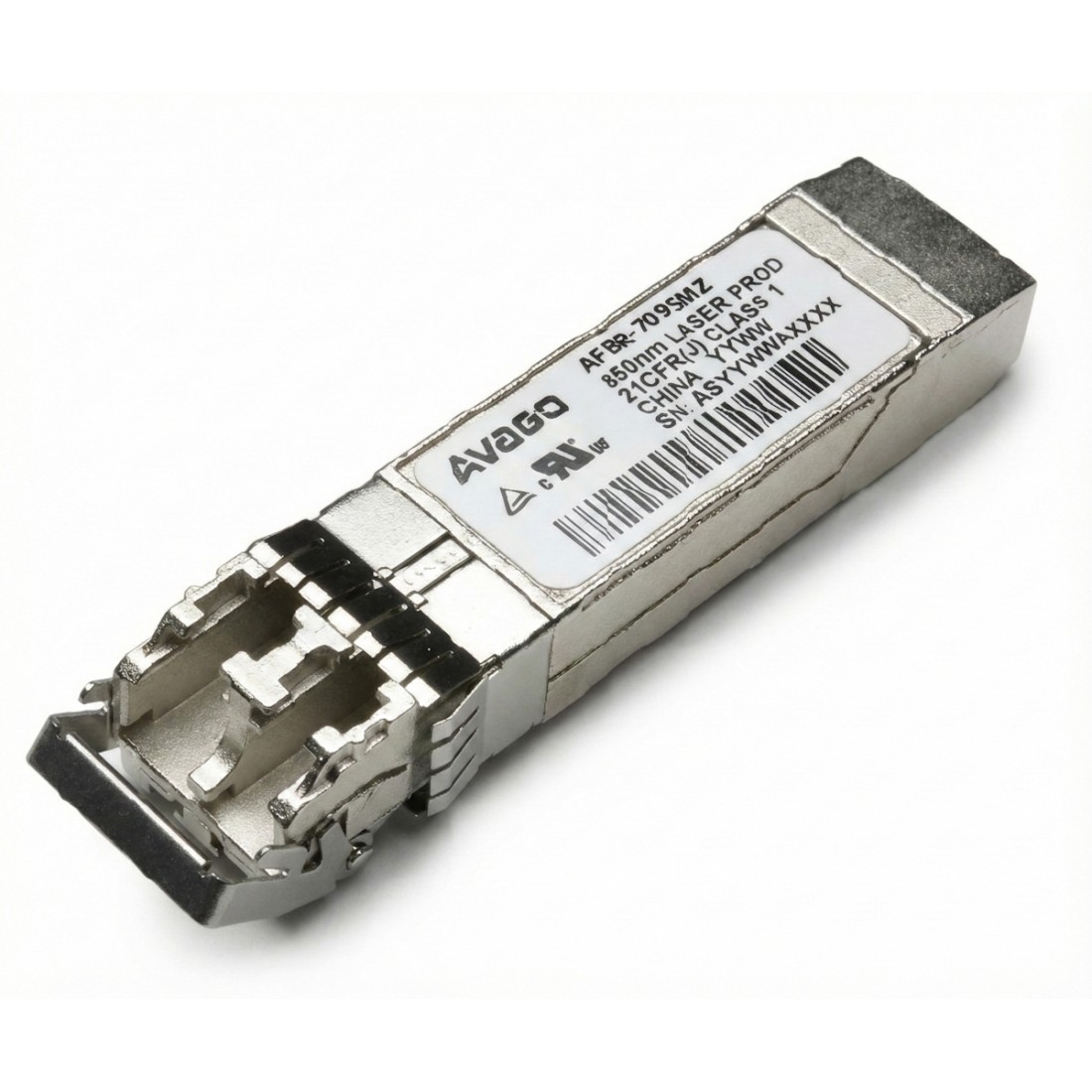
AFBR-709SMZ SFP+ 10 Gigabit Ethernet 10GBASE-SR/SW transceiver is made by Avago and utilizes 850nm VCSEL and PIN Detector technology to provide an IEEE 10Gb Ethernet design compliant with the 10GBASE-SR and 10GBASE-SW standards. The AFBR-709SMZ transceiver is made by Avago and designed to enable 10Gb Ethernet equipment with very high port density based on the new electrical and mechanical specification enhancements to the well known SFP specifications developed by the SFF Committee. These specifications are referred to as SFP+ to recognize these enhancements to previous SFP specifications used for lower speed products. Read the AFBR-709SMZ data sheet for manufacture details and product specifications.
AFBR-709SMZ Features
Avago 850nm VCSEL source and Transmitter Optical Subassembly technology
Avago PIN detector and Receiver Optical Subassembly technology
Typical power dissipation 600mW
Full digital diagnostic management interface
Avago SFP+ package design enables equipment EMI performance in high port density applications with margin to Class B limits
AFBR-709SMZ Specifications
Optical interface specifications per IEEE 802.3ae 10GBASE-SR and 10GBASE-SW
Link lengths at 10.3125 GBd: 300m with 50um OM3 MM fiber and 400m with 50um OM4 MM fiber
Electrical interface specifications per SFF Committee SFF 8431 Specifications for Enhanced 8.5 and 10 Gigabit Small Form Factor Pluggable Module “SFP+”
Management interface specifications per SFF Committee SFF 8431 and SFF 8472 Diagnostic Monitoring Interface for Optical Transceivers
Mechanical specifications per SFF Committee SFF 8432 Improved Pluggable Formfactor IPF
LC Duplex optical connector interface confirming to ANSI TIA/EA 604-10 FOCIS 10A
Compliant to Restriction on Hazardous Substances RoHS per EU and China requirements
Class 1 Eye safe per requirements of IEC 60825-1 / CDRH
The AFBR-709SMZ transceiver package is compliant with the SFF 8432 Improved Pluggable Formfactor housing specification for the SFP+. The Avago AFBR-709SMZ can be installed in any INF-8074 or SFF-8431/2 compliant Small Form Pluggable SFP port regardless of host equipment operating status. The AFBR-709SMZ is hot-pluggable and can be installed while the host system is operating. Upon insertion, the transceiver housing makes initial contact with the host board SFP cage, mitigating potential damage due to Electro-Static Discharge (ESD).
The Digital Diagnostic Interface and Serial Identification via the two-wire interface protocol and signaling detail are based on SFF-8431. Conventional EEPROM memory, bytes 0-255 at memory address 0xA0, is organized in compliance with SFF-8431. New digital diagnostic information, bytes 0-255 at memory address 0xA2, is compliant to SFF-8472. The new diagnostic information provides the opportunity for Predictive Failure Identification, Compliance Prediction, Fault Isolation and Com-ponent Monitoring.
The Avago AFBR-709SMZ predictive failure feature allows a host to identify potential link problems before system performance is impacted. Prior identification of link problems enables a host to service an application via “fail over” to a redundant link or replace a suspect device, maintaining system uptime in the process. For applications where ultra-high system uptime is required, a digital SFP provides a means to monitor two real-time laser metrics associated with observing laser degradation and predicting failure: average laser bias current Tx_Bias and average laser optical power Tx_Power.
Compliance prediction is the ability to determine if an optical transceiver is operating within its operating and environmental requirements. AFBR-709SMZ devices provide real-time access to transceiver internal supply voltage and temperature, allowing a host to identify potential component compliance issues. Received optical power is also available to assess compliance of a cable plant and remote transmitter. When operating out of requirements, the link cannot guarantee error free trans-mission.
The fault isolation feature of the AFBR-709SMZ, allows a host to quickly pin-point the location of a link failure, minimizing downtime. For optical links, the ability to identify a fault at a local device, remote device or cable plant is crucial to speeding service of an installation. AFBR-709SMZ real-time monitors of Tx_Bias, Tx_Power, Vcc, Temperature and Rx_Power can be used to assess local transceiver current operating conditions. In addition, status flags TX_DIS-ABLE and Rx Loss of Signal (LOS) are mirrored in memory and available via the two-wire serial interface.
The transmitter section includes the Transmitter Optical Sub-Assembly (TOSA) and laser driver circuitry. The TOSA, containing an Avago designed and manufactured 850 nm VCSEL (Vertical Cavity Surface Emitting Laser) light source, is located at the optical interface and mates with the LC optical connector. The TOSA is driven by an IC which uses the incoming differential high speed logic signal to modulate the laser diode driver current. This Tx laser driver circuit regulates the optical power at a constant level provided the incoming data pattern is DC balanced.
The AFBR-709SMZ accepts an LVTTL compatible transmit disable control signal input which shuts down the transmitter optical output. A high signal implements this function while a low signal allows normal transceiver operation. In the event of a fault, cycling this control signal resets the module. An internal pull up resistor disables the transceiver transmitter until the host pulls the input low. TX_DISABLE can also be asserted via the two-wire interface at address A2h, byte 110, bit 6 and monitored at address A2h, byte 110, bit 7.
The contents of A2h, byte 110, bit 6 are logic OR’d with hardware TX_DISABLE (contact 3) to control transmitter operation.
A catastrophic laser fault will activate the transmitter signal, TX_FAULT, and disable the laser. This signal is an open collector output (pull-up required on the host board). A low signal indicates normal laser operation and a high signal indicates a fault. The TX_FAULT will be latched high when a laser fault occurs and is cleared by toggling the TX_DISABLE input or power cycling the transceiver. The transmitter fault condition can also be monitored via the two-wire serial interface (address A2, byte 110, bit 2).
The receiver section includes the Receiver Optical Sub-Assembly (ROSA) and the amplification/quantization circuitry. The ROSA, containing a PIN photodiode and custom transimpedance amplifier, is located at the optical interface and mates with the LC optical connector. The ROSA output is sent to a custom IC that provides post-amplification and quantization.
The post-amp IC also includes transition detection circuitry which monitors the AC level of incoming optical signals and provides a LVTTL/CMOS compatible status signal to the host. A high status signal indicates loss of modulated signal, indicating link failures such as broken fiber or failed transmitter. Rx_LOS can also be monitored via the two-wire serial interface at address A2h, byte 110, bit 1.
The AFBR-709SMZ interfaces with the host circuit board through the twenty contact SFP+ electrical connector. See Table 2 for contact descriptions. The module edge connector is shown in Figure 4. The host board layout for this interface is depicted in Figure 8.
The AFBR-709SMZ high speed transmit and receive interfaces require SFF-8431 compliant signal lines on the host board. To simplify board requirements, biasing resistors and AC coupling capacitors are incorporated into the SFP+ transceiver module (per SFF-8431) and hence are not required on the host board. The TX_DISABLE, TX_ FAULT and RX_LOS signals require LVTTL signals on the host board per SFF-8431 if used. If an application does not take advantage of these functions, care must be taken to ground TX_DISABLE to enable normal operation.
AFBR-57F5MZ 16G FC SFP+ Fiber Channel Optical Transceiver
Call for Price: (888) 682-5335
AFBR-57R5AEZ 4.2Gb SFP Digital Diagnostic Optical Transceiver
Call for Price: (888) 682-5335
AFBR-57F5MZ-ELX 16Gb SFP+ Fiber Channel Optical Transceiver
Call for Price: (888) 682-5335
57-1000490-01 Brocade 4x32G FC QSFP+ SWL Optical Transceiver
Call for Price: (888) 682-5335
57-1000117-01 Brocade 8Gb SWL SFP Optical Transceiver
Call for Price: (888) 682-5335
57-1000485-01 Brocade 32Gb SWL SFP+ FC Transceiver
Call for Price: (888) 682-5335
57-1000333-01 Brocade 32Gb SWL SFP+ Optical Transceiver
Call for Price: (888) 682-5335
IBM EB48 1GbE Base-T RJ45 Transceiver 03FP283
Call for Price: (888) 682-5335
IBM EB46 10 GbE SFP+ SR Optical Transceiver
Call for Price: (888) 682-5335
IBM EB47 25GbE Optical Transceiver SFP28
Call for Price: (888) 682-5335
DS-SFP-FC32G-SW Cisco 32-Gbps Fiber Channel SFP+ Transceiver
Call for Price: (888) 682-5335
DS-SFP-FC16G-SW Cisco 16 Gbps Fiber Channel SFP+ Shortwave Transceiver
Call for Price: (888) 682-5335
SFP-10G-AOC10M 10GBASE-AOC Active 10 meter Optical Cable SFP+ assembly
Call for Price: (888) 682-5335
SFP-10G-AOC2M 10GBASE-AOC Active 2 meter Optical Cable SFP+ assembly
Call for Price: (888) 682-5335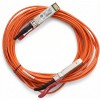
SFP-10G-AOC7M 10GBASE-AOC Active 7 meter Optical Cable SFP+ assembly
Call for Price: (888) 682-5335
SFP-10G-AOC3M 10GBASE-AOC Active 3 meter Optical Cable SFP+ assembly
Call for Price: (888) 682-5335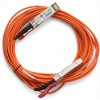
SFP-10G-AOC5M 10GBASE-AOC Active 5 meter Optical Cable SFP+ assembly
Call for Price: (888) 682-5335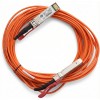
SFP-10G-AOC1M 10GBASE-AOC Active 1 meter Optical Cable SFP+ assembly
Call for Price: (888) 682-5335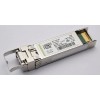
SFP-10G-SR-S Cisco 10GBASE-SR S-Class module
Call for Price: (888) 682-5335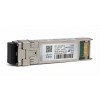
SFP-25G-SR-S Cisco 25GBASE-SR SFP28 Module for MMF
Call for Price: (888) 682-5335
IBM 579C PCIe4 x8 2-Port 32Gb Fiber Channel Adapter
Call for Price: (888) 682-5335